What it actually is
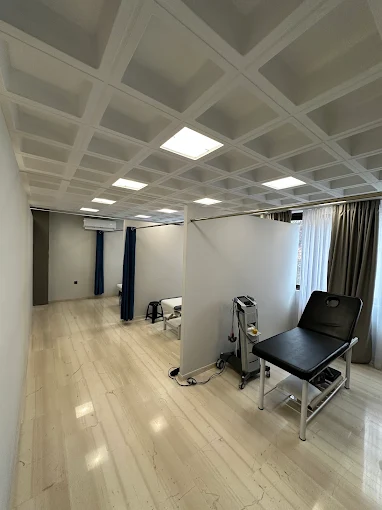
Tecar stands for 'Transfer of Energy Capacitive And Resistive'. In practice, the device delivers a high-frequency current into the tissue through an electrode that the therapist moves across the skin.
The effect is a rise in tissue temperature at depth and a local increase in blood flow. The capacitive electrode acts mainly on superficial soft tissue with high water content — muscle, lymphatic system. The resistive electrode works deeper, on higher-resistance tissue such as tendons, ligaments and bone.
When we use it
Tecar enters the plan mainly in two situations: when pain is limiting a patient's ability to exercise, and when tissue needs preparing before manual therapy or loading.
- Acute and subacute sports injuries — strains, sprains, muscle trauma
- Tendinopathy (Achilles, patellar, rotator cuff)
- Neck and low back pain with marked muscle guarding
- Post-operative swelling and stiffness, at the appropriate stage
- Chronic musculoskeletal conditions with restricted mobility
What the evidence says — honestly
The literature on Tecar is growing and shows positive findings mainly for short-term pain reduction and improved function, often when combined with exercise. There is not, however, strong evidence supporting it as a standalone treatment or a substitute for therapeutic exercise.
That's exactly how we use it: as a tool that opens a window of lower pain, within which the real work — mobilisation and progressive loading — can happen. If a clinic promises recovery through machines alone, it's worth asking what you'll actually be doing in the remaining sessions.
What a session feels like
Application usually takes 15–25 minutes per area. A conductive cream is applied and the therapist moves the electrode over the skin while you feel a gradually building, comfortable warmth. It isn't painful and needs no recovery time — you can carry on with your day.
There are contraindications: pacemakers or other implants, pregnancy, active malignancy, thrombophlebitis, and areas with reduced sensation. Your history is always checked before the first application.
Last updated: